Innovative Healthcare solution
What is Smart Healthcare?
Smart Healthcare is a health service system that uses technology, such as wearable devices, asset trackers, and environmental monitors, to dynamically access information and connect people, materials, and institutions related to healthcare. Smart healthcare actively develops to allow medical professionals to manage and respond to medical ecosystem needs effectively. The Internet of Things also makes healthcare more efficient, more convenient, and more personalized for each patient.
How Do Patiently Medicare Solutions Work?
Gather data on patient vital signs (body temperature, respiration rate, chest expansion, etc.) and then send it to the gateway so it can forward the data packets to the network server. After that, the network server sends data to our application, where healthcare professionals can search data through the patients, monitor their health conditions in real-time, and generate comprehensive reports.
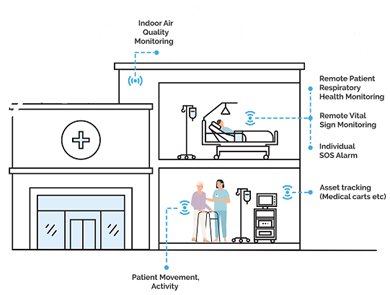
Smart hospital rooms are revolutionizing patient care by leveraging technology to enhance efficiency, improve safety, and enrich the patient experience. Here’s a breakdown of how these advanced technologies are making a difference:
- 1. Remote Patient Monitoring: This involves using sensors and devices to continuously track patients' vital signs and other health metrics. Data from these devices is sent to healthcare staff in real-time, reducing the need for frequent in-person checks.
- 2. Computer Vision Technology: Cameras and sensors monitor patients for fall risks or unusual behavior, alerting staff if a patient attempts to get out of bed without assistance.
- 3. Sensors and AI Technology: These tools monitor vital signs and other health indicators, ensuring that any deviations are promptly detected and addressed, minimizing the need for manual checks.
- Efficiency: By reducing the number of physical checks needed, nurses can focus on more complex tasks and spend more time on direct patient care.
- Higher Patient-to-Nurse Ratios: With the support of technology, healthcare facilities can manage more patients per nurse without compromising care quality.
- Enhanced Communication: Technologies like the Aware digital door signs and Engage TV systems keep both patients and staff well-informed, improving overall coordination and efficiency.
- Personalizes the in-room experience by offering education and engagement tailored to individual patients.
- Helps patients understand their care and stay occupied, potentially improving their overall experience.
- Improve communication between patients and healthcare providers, ensuring that important information is readily available.
- Real-time patient information is integrated into the system, allowing for better care coordination and up-to-date records.
- Personalized Information: Displays show patient-specific details, goals, and instructions to engage patients in their care.
- Automated Updates: Real-time updates from EHRs and third-party systems keep all information current.
- Enhanced Communication: Includes nurse notes, personal messages, QR codes, and other tools to strengthen communication.
- Education & Readiness: Prompts for education compliance and discharge readiness are displayed to help patients prepare for discharge.
- Real-Time Updates: Automated updates 24/7 through EHR integration.
- Care Team Details: Integrated with RTLS (Real-Time Location Systems) and Active Directory to show relevant staff information.
- Safety Alerts: Displays visual alerts for patient safety risks such as falls or allergies.
- Education & Readiness: Prompts for education compliance and discharge readiness are displayed to help patients prepare for discharge.
- Real-Time Updates & Communication: Keeps patients and staff informed about care and schedules.
- Helpful Information: Provides useful information and conveniences to patients.
- Comforts & Distractions: Offers soothing elements and positive distractions to improve patient comfort.
- Actionable Requests: Facilitates screenings, surveys, and patient requests to support quality care.